
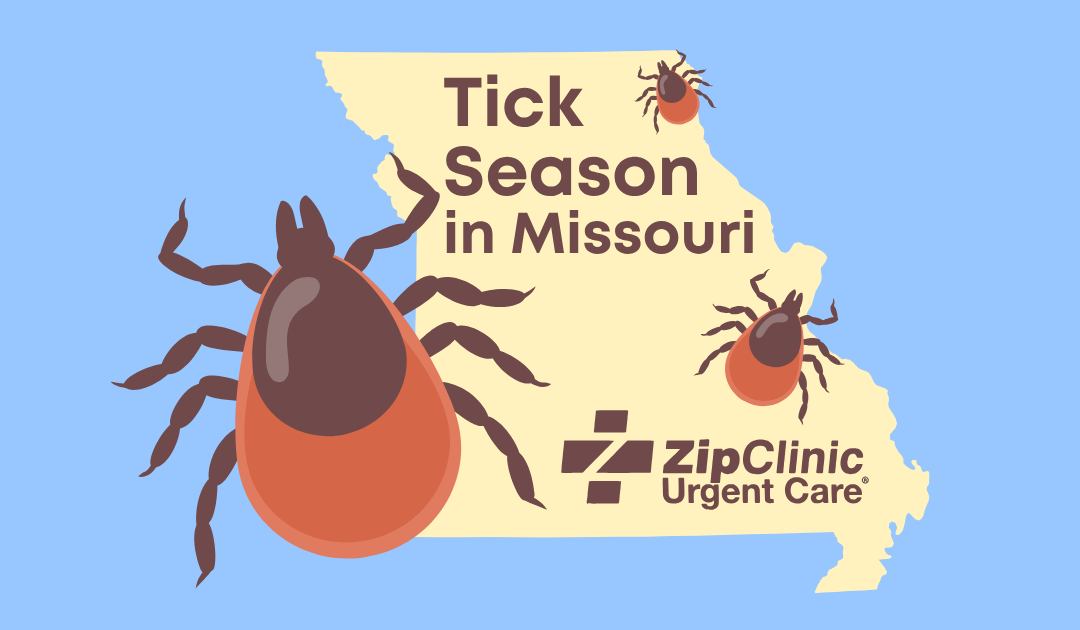
Symptoms, Prevention, Tick Removal, and When to Visit Urgent Care
As temperatures warm up across Missouri, tick season is in full swing. Whether you’re hiking, camping, gardening, fishing, working outdoors, or enjoying local parks around the St. Louis area, it’s important to know how to prevent tick bites and recognize the signs of tick-borne illnesses.
Ticks are common throughout Missouri and can be found in wooded areas, grassy fields, parks, and even residential yards. While many tick bites are harmless, some ticks can carry diseases that require prompt medical attention. Understanding the risks can help protect you and your family during tick season.
When Is Tick Season in Missouri?
Tick season in Missouri typically begins in the spring and continues through the summer and early fall. However, ticks may remain active anytime temperatures stay above freezing.
The most common ticks found in Missouri include:
- Lone Star tick
- American dog tick
- Blacklegged tick (deer tick)
These ticks are commonly found in:
- Tall grass
- Wooded areas
- Leaf litter
- Bushes and shrubs
- Parks and hiking trails
- Campgrounds
- Yards with pets or wildlife
Ticks wait on vegetation and attach to people or animals as they brush past, making everyday outdoor activities a common source of exposure.
What Diseases Can Ticks Carry in Missouri?
Ticks in Missouri can spread several illnesses, including:
- Rocky Mountain spotted fever
- Ehrlichiosis
- Lyme disease
- Alpha-gal syndrome (a red meat allergy linked to certain tick bites)
- Tularemia
Although not every tick carries disease, it’s important to monitor for symptoms after any tick bite.
What Are the Symptoms of a Tick-Borne Illness?
Symptoms can develop within a few days or even several weeks after a tick bite, depending on the illness.
Common symptoms include:
- Fever
- Chills
- Fatigue
- Headache
- Muscle aches
- Joint pain
- Rash
- Swollen lymph nodes
If you develop any of these symptoms after a tick bite or after spending time outdoors, seek medical evaluation promptly. Early diagnosis and treatment can help prevent more serious complications.
How Can You Prevent Tick Bites?
A few simple precautions can greatly reduce your risk of tick bites.
Wear Protective Clothing
When spending time outdoors:
- Wear long sleeves and long pants.
- Choose closed-toe shoes.
- Wear light-colored clothing to make ticks easier to spot.
- Tuck pant legs into your socks when walking through tall grass or wooded areas.
Use Tick Repellent
Apply an EPA-registered insect repellent containing:
- DEET
- Picaridin
- Permethrin (for clothing and outdoor gear)
Always follow the product instructions for proper use.
Check Yourself for Ticks
After spending time outdoors:
- Check your entire body carefully.
- Pay close attention to your scalp, behind your ears, under your arms, around your waist, behind your knees, and between your legs.
- Shower as soon as possible after coming indoors.
- Check children and pets thoroughly since ticks can easily be brought into the home.
How Do You Safely Remove a Tick?
If you find an attached tick:
- Use fine-tipped tweezers.
- Grasp the tick as close to the skin as possible.
- Pull upward with slow, steady pressure.
- Clean the bite area with soap and water or rubbing alcohol.
Avoid:
- Twisting the tick
- Crushing the tick
- Burning the tick
- Covering it with petroleum jelly or other substances
Prompt removal may help reduce the risk of disease transmission.
When Should You Visit Urgent Care for a Tick Bite?
Many tick bites heal without complications. However, you should seek medical care if you experience:
- Fever after a tick bite
- A spreading rash or unusual skin changes
- Persistent headache
- Fatigue or body aches
- Joint pain
- Signs of infection around the bite
- Concerns about Lyme disease, Rocky Mountain spotted fever, or another tick-borne illness
If you’re unsure whether your symptoms are related to a tick bite, it’s always best to be evaluated by a medical provider.
How Zip Clinic Urgent Care Can Help
At Zip Clinic Urgent Care in Maryland Heights, our experienced medical providers evaluate tick bites and symptoms of tick-borne illnesses throughout tick season. We can examine the bite, assess your symptoms, and determine whether additional testing or treatment is appropriate.
We commonly care for patients with:
- Tick bite evaluations
- Rashes following tick bites
- Fever, fatigue, headaches, and body aches
- Concerns about Lyme disease, Rocky Mountain spotted fever, or other tick-borne illnesses
- Antibiotic treatment when medically appropriate
Many tick-borne illnesses respond best when diagnosed and treated early, making prompt evaluation important if symptoms develop.
Zip Clinic Urgent Care provides fast, convenient walk-in medical care for patients in Maryland Heights, St. Louis, Creve Coeur, Bridgeton, Overland, and surrounding Missouri communities.
Visit Zip Clinic Urgent Care
Address
2070 McKelvey Rd.
Maryland Heights, MO 63043
- Monday–Friday: 8:00 a.m. – 8:00 p.m.
- Saturday: 9:00 a.m. – 6:00 p.m.
- Sunday: Closed
Phone: 314-434-1900
Text: Text “ZIP” to 843-418-9107
Recent Comments